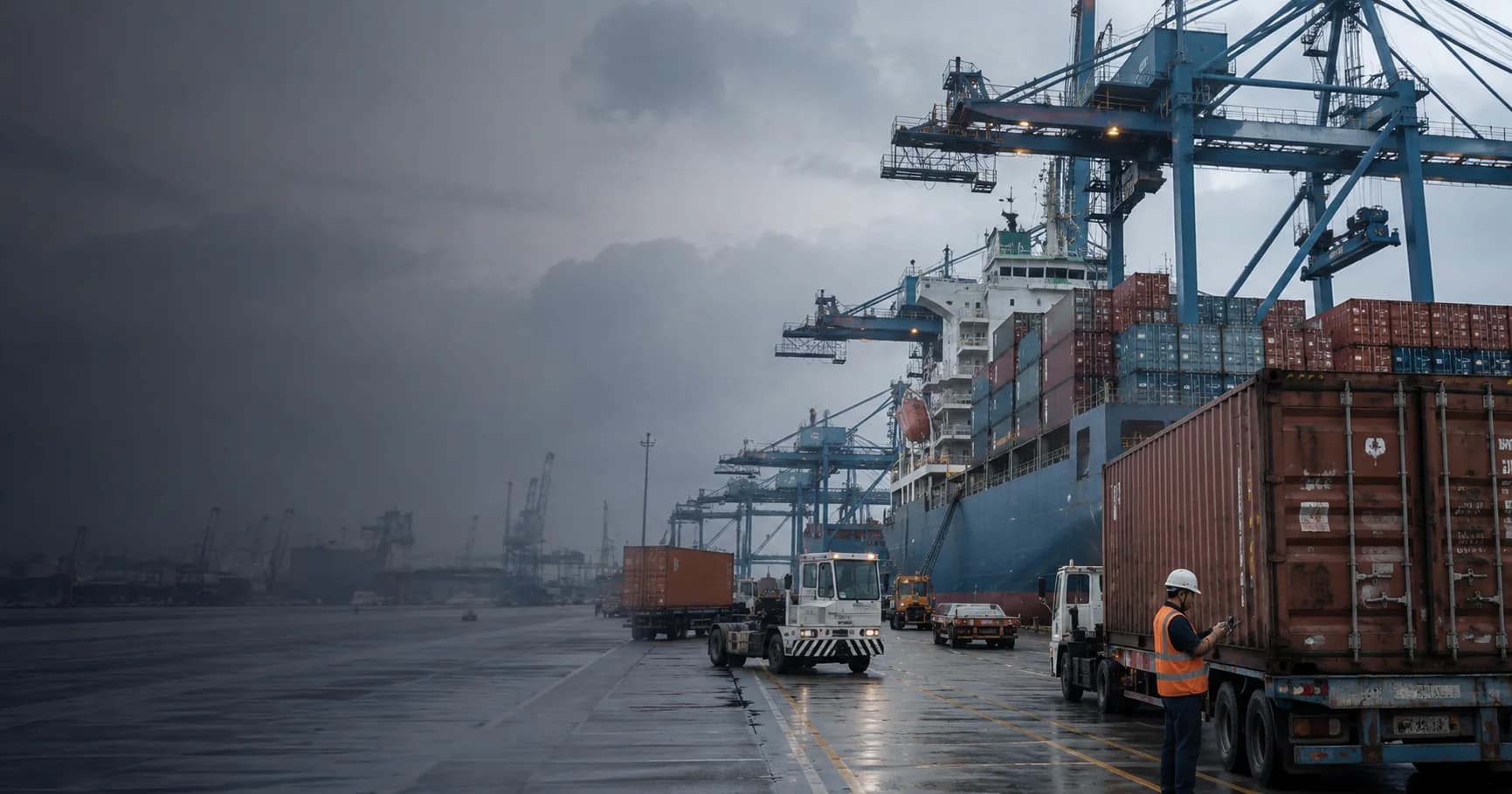
A U.S. importer may ask a Vietnamese factory to ship earlier because tariff rates or exemption scopes could change. That decision compresses bookings, container needs, warehousing and working capital into a shorter window. At the same time, exporters may need to show that goods genuinely originate where declared, where inputs came from and where each production stage took place.
The distinction matters: this is not a single straight line of causation. U.S. tariffs create pressure in the import market; frontloading is a short-term buyer response; and Circular 31/2026/TT-BCT is a Vietnamese management policy. Their common thread is a trading environment that places greater weight on transparency, origin control and rapid adaptation.
Concept
What is frontloading?
Frontloading means moving purchase orders, production or transportation ahead of the normal plan. In a tariff context, importers may want cargo to arrive before a policy change, or at least move while costs and conditions remain more predictable.
This does not necessarily mean final consumer demand is growing sustainably. Some future sales are simply pulled into the present. AP reported businesses preparing for new tariffs by shipping goods early. That supports frontloading as a real market response, not a conclusion that demand is rising in every industry. AP context
Response mechanism
Why can tariffs push companies to ship earlier?
Reduce landed-cost uncertainty
Importers need a workable cost estimate before setting retail prices, margins and sales programs.
Use transition provisions
Some measures include exemptions or transition conditions; eligibility must be checked against the specific entry documentation.
Protect the sales calendar
Back-to-school, holiday and retail-program cargo cannot simply be late because a policy window changes.
Secure transport capacity
When many buyers react at once, early booking can reduce the risk of missing capacity in the required shipping week.
Read the latest U.S. measure within its exact scope
A White House memorandum directed Section 301 action covering 60 economies. Vietnam falls in the 12.5% group, subject to product exemptions. Vietnam’s Ministry of Industry and Trade said the remaining scope after exemptions represented about 37% of the country’s current exports to the United States. The measure took effect on July 24, 2026, U.S. Eastern Time. White House memorandum · MOIT explanation
Market signal
What do port data indicate?
The Port of Los Angeles is an important observation point for U.S. container imports. However, one port’s data do not isolate Vietnamese cargo and cannot prove that tariffs alone caused a change in volume.
1,002,734 TEU
June 2026 throughput
Port of Los Angeles+13%
Loaded imports, year over year
Port of Los Angeles5,122,603 TEU
First six months of 2026
Port of Los AngelesThe port described June as its busiest June on record and said businesses continued to bring goods in early amid shifts in trade policy, fuel prices and supply chains. Its April release also compared current volumes with a 2025 base that included substantial frontloading. June report · April report
Traceability
How do Circular 31/2026/TT-BCT and VeriGoods relate?
Circular 31 regulates traceability for products and goods under the Ministry of Industry and Trade’s management. High-risk categories are mandatory, while other categories are encouraged to participate. Businesses may declare directly in VeriGoods or use an internal system able to connect and share data with the Ministry’s platform. Official summary · Full Circular
Pressure from the import market
The new Section 301 action concerns economies that have not prohibited, or have not effectively enforced a prohibition on, imports produced with forced labor. Vietnamese exporters may need deeper evidence on inputs and suppliers.
Management policy and traceability data
The Circular was issued on June 11, 2026 and took effect on July 1, before the U.S. memorandum dated July 23, 2026. It should therefore not be presented as a policy issued directly because of the new tariff rate. Document timeline · U.S. memorandum
The overlap is the ability to substantiate claims. A data system that traces backward from finished goods to inputs and forward from inputs to shipments can speed responses to buyers or regulators. Yet Vietnam’s “high-risk” scope does not perfectly match the scope of possible U.S. checks; exporters may need deeper traceability than the domestic minimum. MOIT guidance
Impact map
Read left to right on desktop and top to bottom on mobile.
Often overlooked
The risks of frontloading
Higher inventory
Cargo arriving ahead of sales can increase warehousing, insurance and inventory-handling costs.
Cash tied up
Inputs, production, freight and duties are paid before sales revenue is collected.
Capacity and equipment gaps
Bookings concentrated in one window can increase container shortages, rollovers or schedule changes.
Pressure at ports
A rapid volume increase can create localized bottlenecks at yards, gates, CFS facilities or inland connections.
Detention and demurrage
Changed cut-offs, late documents or idle cargo can consume container free time and terminal storage time.
Origin-document errors
Mismatched HS codes, BOMs, C/O, invoices and supplier data can delay verification.
Anti-circumvention investigations
Transshipment, relabeling or insufficient processing to confer origin can create trade-remedy exposure.
Vietnam’s Ministry of Industry and Trade advises against transshipment, relabeling or simple repacking used to claim Vietnamese origin. Late, inconsistent records that cannot be tied to the physical goods can increase the risk of inspection, detention or import refusal. Official recommendation
Execution plan
What should Vietnamese exporters prepare?
Model the U.S. import date, not only the ETD
Work with the importer and customs broker to confirm tariffs, exceptions, transition rules and evidence by HS code. Do not promise that “shipping first avoids the tariff” without checking entry conditions.
Set thresholds for frontloading decisions
Purchasing, sales, production and finance should jointly review forecasts, warehouse capacity, working capital and maximum inventory. Early orders make sense only when avoided costs outweigh inventory cost and risk.
Lock the logistics plan and a Plan B
Confirm bookings, container types, cut-offs, free time, rollover terms and route or port alternatives. Prepare LCL, air or split-shipment options when delivery priority outweighs cost.
Clean up HS code, C/O and BOM records
HS codes on commercial invoices, declarations and certificates of origin must match the product description. The BOM should connect inputs, usage rates and origin-conferring processes to the finished-goods lot.
Map multi-tier suppliers
Do not stop at the direct supplier. For sensitive inputs, identify factories, countries or territories, purchasing records and evidence addressing forced-labor exposure.
Standardize lot-level traceability
Use consistent lot, batch or serial identifiers across ERP, warehouse, QC, production and logistics documents. Where Circular 31 applies, assess direct VeriGoods declarations or internal-system connectivity.
Coordination capability
The role of a forwarder or logistics provider
A forwarder does not set tariff rates or prove origin on the exporter’s behalf. Its value is turning a commercial plan into an operational option with clear data, deadlines and control points.
Update lane capacity, cut-offs, transit times and rollover exposure.
Compare origin and destination ports, FCL/LCL/air options and split shipments.
Estimate freight, surcharges, free time and detention/demurrage exposure.
Check the apparent completeness of the document set before declaration.
Track milestones, flag schedule deviations and coordinate exceptions.
Preserve booking, container, bill-of-lading and delivery records that link back to shipment lots.
Act now
Seven checks before shipping early
Operational checklist
For sales, purchasing, import-export and logistics teams.
- 1Confirm the tariff scenario by HS code and expected U.S. import date with the importer and customs broker.
- 2Reconcile the forecast, purchase orders, production capacity and inventory ceiling before accepting a request to ship early.
- 3Book early and confirm cut-offs, free time, rollover terms and backup route or port options.
- 4Check that HS codes, commercial invoices, packing lists, bills of lading and certificates of origin are consistent.
- 5Link each BOM to raw-material lots, suppliers, production sites and purchasing records.
- 6Standardize traceability data by lot, batch or serial number; assess VeriGoods connectivity where the rules apply.
- 7Assign a rapid-response owner for verification requests from buyers, customs or trade-remedy authorities.
Conclusion
Shipping early only works when the data move first
Frontloading can protect delivery windows and reduce some uncertainty, but it concentrates risk in inventory, capital, containers and documentation. Exporters need a single source of truth connecting forecasts, BOMs, origin, bookings and delivery records—not merely an earlier sailing.
SeaAir Global can help review routing options, booking windows, surcharges, free time and contingency plans for U.S.-bound shipments.
Fact check
References
Official documents and data are prioritized. AP is used for additional business-response context. The article paraphrases the sources and does not reproduce them verbatim.
- 1White House — Section 301 action memorandum covering 60 economies
- 2Vietnam Ministry of Industry and Trade — Final findings and scope for Vietnamese goods
- 3Port of Los Angeles — June 2026 container volume
- 4Port of Los Angeles — April volume and the prior-year frontloading base
- 5Vietnam Government Portal — Circular 31/2026/TT-BCT
- 6Vietnam Ministry of Industry and Trade — VeriGoods and supply-chain transparency
- 7Associated Press — New-tariff context and frontloading