Industrial machinery cannot be packed like ordinary cartons. Its weight, centre of gravity, exposed surfaces and sensitivity to humidity must all be understood before the first layer of protective material is applied. A suitable export machinery packing plan therefore starts with the cargo and the transport route, not with a standard crate size.
This case shows a coordinated workflow from on-site inspection to protective wrapping, base reinforcement, outer covering, lifting and container loading. Customer and equipment details are withheld for confidentiality.
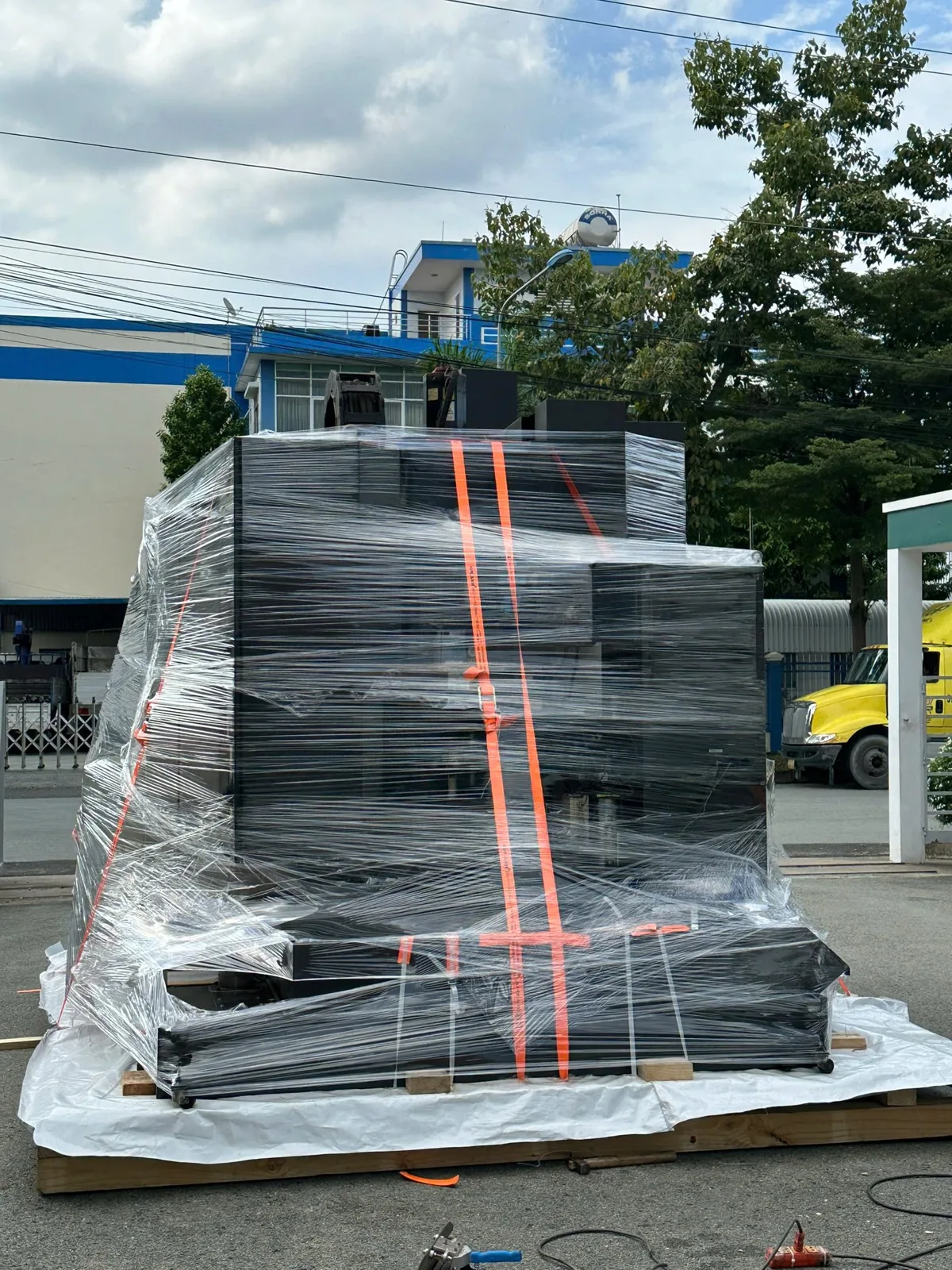
Why export machinery needs a cargo-specific packing plan
During factory pickup, inland trucking, terminal handling and sea transport, machinery may face repeated lifting, vibration, sudden movement, rain, salt-laden air and changing humidity. Packing should address the risks that are relevant to the actual equipment:
- movement between the machine and its base;
- impact on exposed controls, corners, pipes or painted surfaces;
- moisture and condensation during storage or sea transport;
- pressure from lashing and lifting operations;
- access required for forklift pockets, lifting points or inspection.
The right solution may combine cushioning, surface protection, stretch film, moisture-barrier material, a timber base, steel reinforcement, an outer crate or a weather-resistant cover. Not every machine needs every layer; the specification should follow the risk assessment.
Machinery packing workflow used for export shipments
1. Survey the machine and the loading site
The team records overall dimensions, weight, centre-of-gravity information, removable parts, lifting points and sensitive components. Site access, forklift or crane capacity, door clearance and the selected container or transport equipment are checked at the same time.
2. Build and reinforce the load-bearing base
The base must distribute the cargo load and remain stable during lifting. Blocking, bolting, bracing or steel reinforcement can be selected according to the machine structure and handling plan. The goal is to prevent relative movement between the equipment and its base.
3. Protect surfaces and vulnerable components
Sharp edges, control panels, connectors and painted surfaces are covered before the main wrapping layer. Loose parts are secured or packed separately and identified for reassembly.
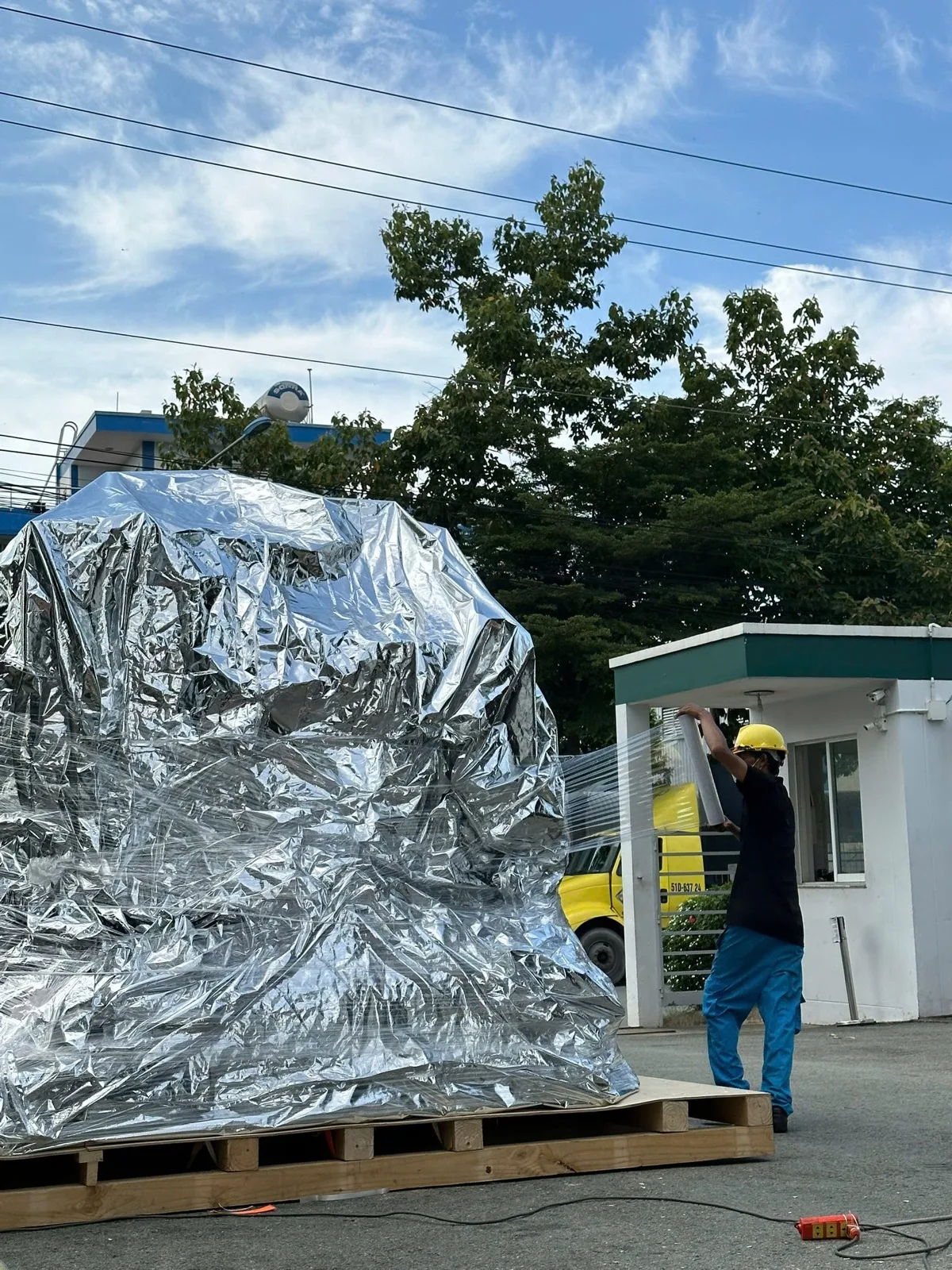
4. Apply moisture protection and outer wrapping
The wrapping method depends on transport duration, storage conditions and the machine's sensitivity. Barrier material, desiccant, stretch film and an outer weather-resistant layer may be combined to reduce exposure to moisture, dust and rain.
5. Complete the crate or protective enclosure
Where the route requires stronger mechanical protection, the machine is enclosed in a timber or framed crate. The packing team keeps lifting and handling points accessible and marks the package with the information needed by operators.
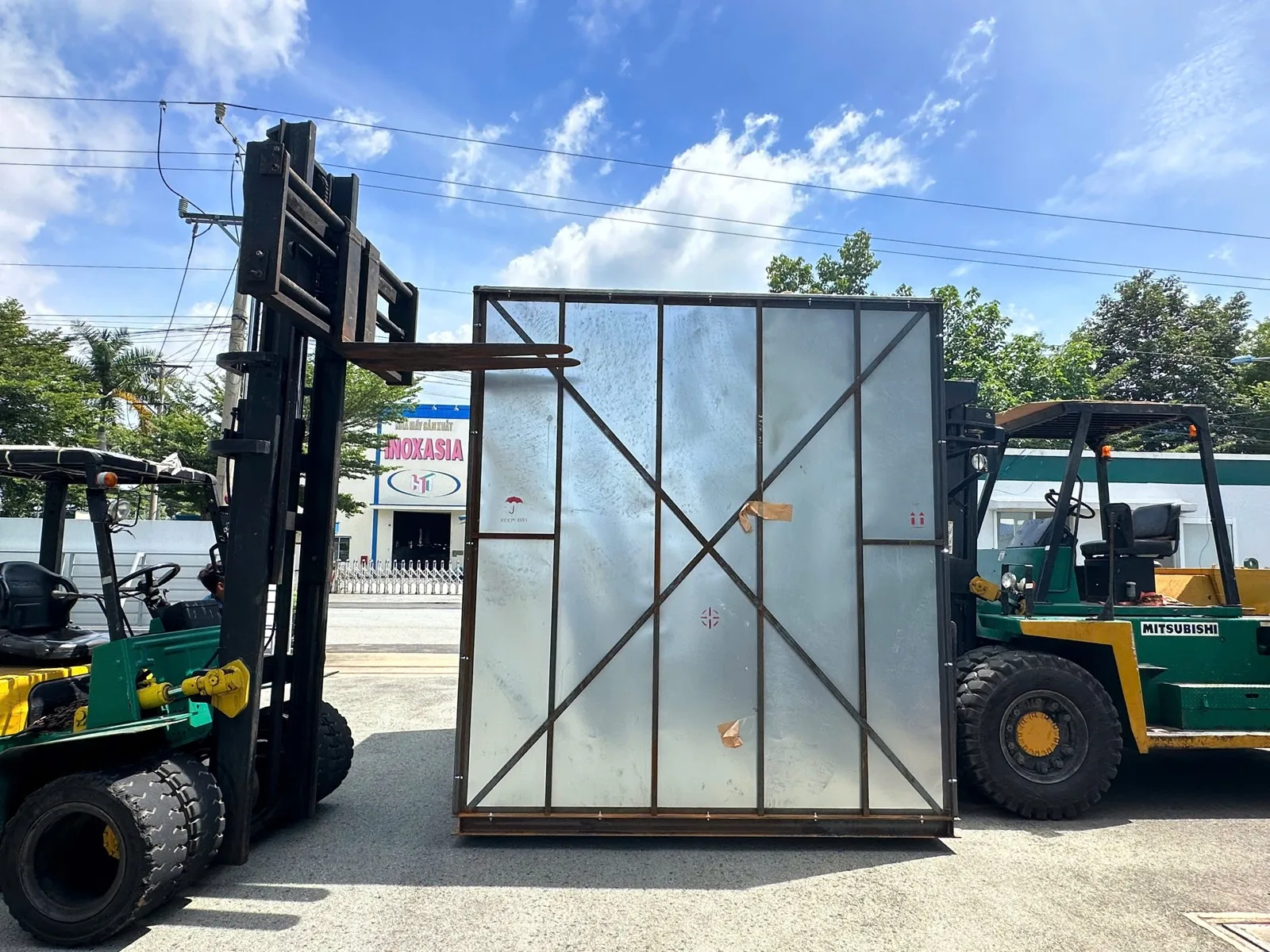
6. Lift, secure and load into the container
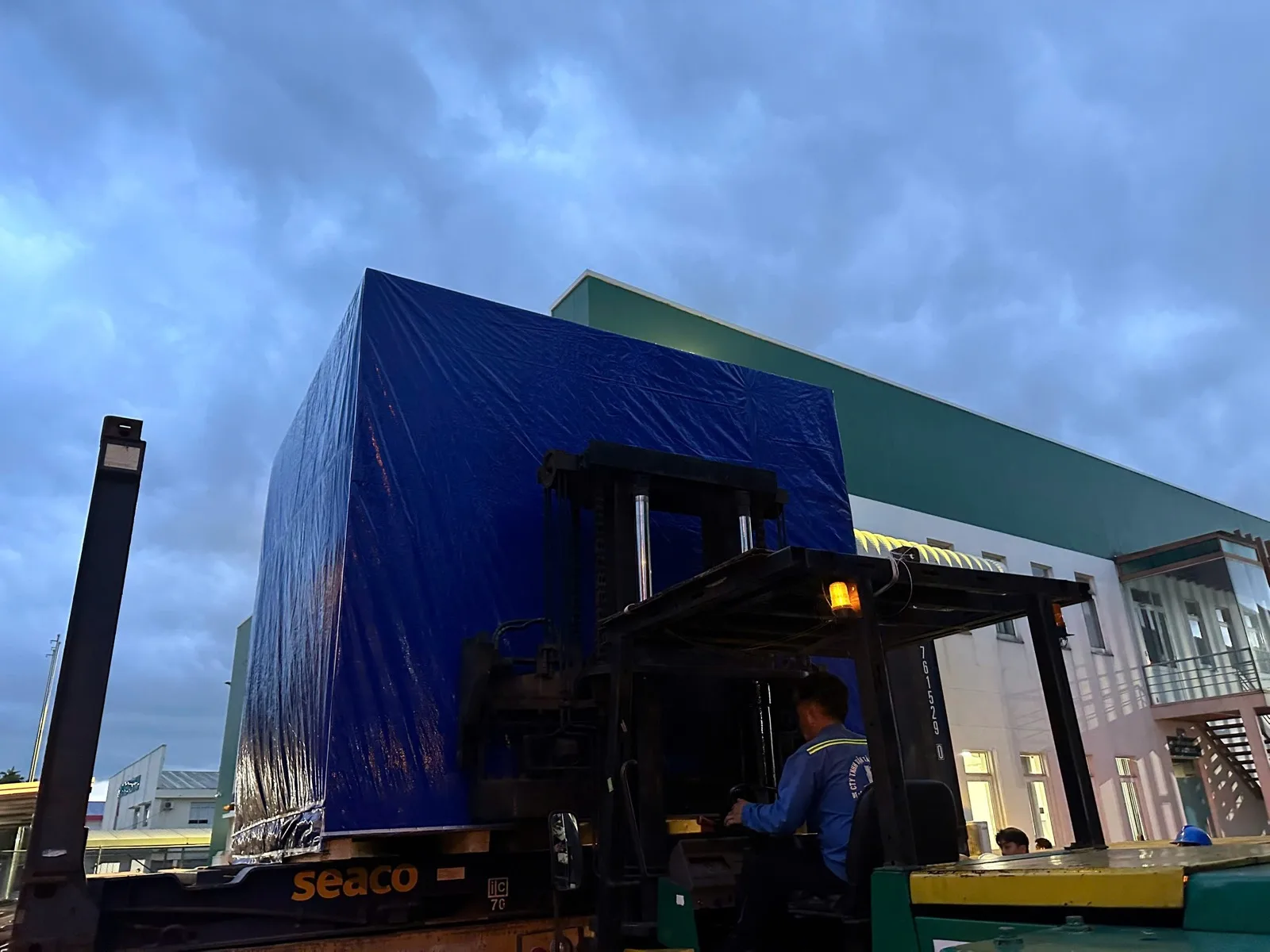
Packing is only complete when it works with the loading method. The team aligns forklift or crane operations, checks package clearance, positions the crate and secures it for the planned transport mode.
Information needed for an accurate machinery-packing quotation
Providing the following information helps the operations team recommend the right scope and avoid a quotation based on assumptions:
- equipment name, quantity, dimensions and gross weight;
- clear photos from several sides and details of vulnerable parts;
- available lifting points and centre-of-gravity information;
- pickup address, loading hours and site-access restrictions;
- transport mode, container type and destination;
- expected outdoor storage time or exposure to weather;
- destination packing, marking or timber-treatment requirements.
Frequently asked questions
Should every export machine be vacuum packed?
No. Vacuum or barrier packing is selected according to the machine, transport time and moisture risk. Some cargo only needs surface protection and secure crating, while sensitive equipment may need a more controlled barrier system.
Is a timber crate enough to prevent corrosion?
Not by itself. A crate provides mechanical protection, but moisture control may require an inner barrier, desiccant and a suitable sealing method. The complete specification should address both impact and humidity.
Can SeaAir coordinate packing and international transport together?
Yes. Combining packing with pickup, lifting, customs coordination and freight planning reduces handover gaps. See SeaAir Global's project cargo service or request a shipment assessment with dimensions, weight, photos and the planned route.
Challenge
The machinery required protection against movement, impact, dust and humidity while remaining compatible with forklift, crane and container-loading operations.
SeaAir solution
SeaAir coordinated inspection, surface protection, moisture-barrier wrapping, load-bearing base reinforcement, outer enclosure, lifting and final securing.
Result
The package was completed as one coordinated handling system, ready for controlled lifting and container loading.