China-origin spot freight continued to soften at the end of July 2026, but importers should not assume that their all-in cost will fall at the same pace. Three forces are pulling in different directions: weaker demand, carrier capacity management, and additional operating pressure from fuel surcharges and port delays.
Drewry's 30 July update showed its Intra-Asia Container Index (IACI) unchanged at USD 956 per 40-foot container after five consecutive weeks of decline. Several Shanghai-origin benchmarks still fell: Shanghai–Jakarta dropped 5% to USD 1,405 per 40 feet, Shanghai–Laem Chabang fell 4% to USD 890, and Shanghai–Manila declined 3% to USD 447.
The main signal: softer base rates, but not necessarily a matching drop in all-in cost
| Factor | End-July development | Possible early-August effect |
|---|---|---|
| Intra-Asia demand | Peak demand faded on several trades | Downward pressure on base spot rates |
| Capacity management | Carriers can adjust sailings or deploy blank sailings | Rate movement can vary by port and week |
| Fuel | Drewry reported planned emergency surcharges of USD 38–75 per TEU on regional short-haul routes from the first week of August | The total buying price may fall less than the ocean-freight component |
| Port operations | Average vessel waiting time in Shanghai rose to 77 hours from 39 hours a week earlier | Higher risk of rolled ETDs, connection delays, and related cost |
The broader Drewry World Container Index also fell for a third consecutive week to USD 4,255 per 40 feet. Shanghai–Los Angeles, Shanghai–Rotterdam, and Shanghai–Genoa all declined, reinforcing the signal that demand pressure had eased. Carriers were nevertheless using blank sailings to manage supply, while emergency fuel surcharges were taking effect in August.
What does this mean for China–Vietnam cargo?
Shanghai–Jakarta, Laem Chabang, and Manila are market indicators, not quotations for China–Vietnam shipments. The IACI basket includes Shanghai–Ho Chi Minh City, but Drewry's public 30 July commentary did not publish a lane-specific rate for that direction. The index also excludes origin and destination terminal handling charges.
A benchmark should therefore not be applied directly to cargo moving into Hai Phong, Cat Lai, or Cai Mep. The executable price still depends on the China origin port, Vietnam destination, container type, cargo weight and commodity, cargo-ready date, direct versus transshipment service, carrier and sailing week, local charges, and quotation validity.
The useful buying signal is: base ocean freight has room to soften, while all-in cost may decline more slowly because of surcharges and operating delays.
Schedule risk after severe weather
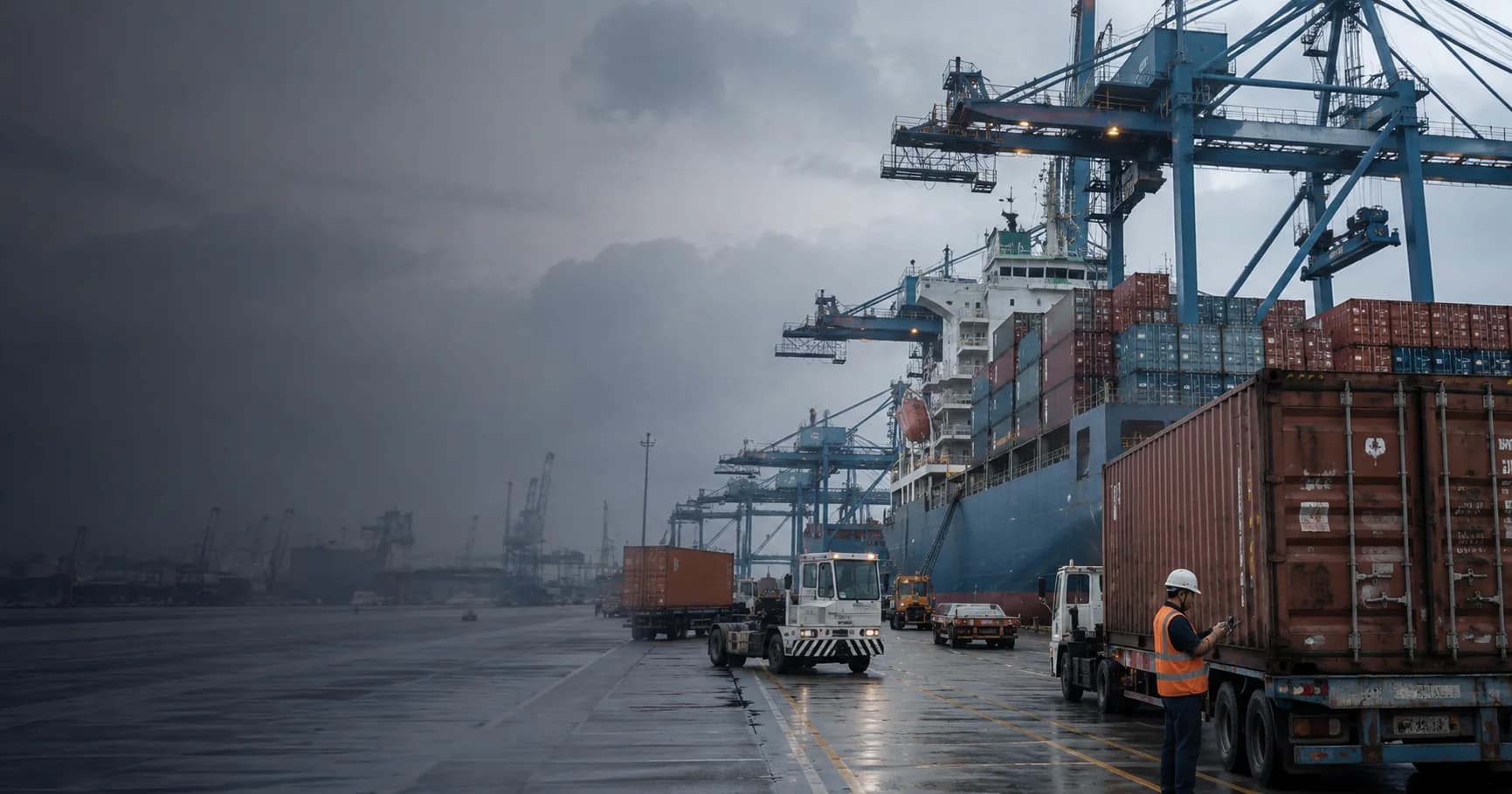
Drewry reported that typhoons Noul and Bavi disrupted ports in southern and eastern China, with Shanghai's average vessel waiting time reaching 77 hours in week 31. Maersk had separately warned of possible port closures and extended waits in Shanghai and Ningbo during Typhoon Bavi, publishing omission and contingency plans for selected sailings.
One carrier advisory does not mean that every vessel will be late. For deadline-sensitive cargo, however, shippers should verify the actual vessel and voyage rather than relying only on a standard transit schedule shown in a quotation.
Booking checklist for this week
- Ask for ocean freight, fuel surcharge, local charges, and trucking to be shown separately.
- Confirm whether the price already includes any surcharge effective from the first week of August.
- Recheck expected ETD, cut-off, vessel/voyage, and the possibility of schedule changes.
- Confirm direct or transshipment service and allow a buffer at any connection port.
- Note the quotation validity; a falling weekly benchmark does not guarantee that every sailing will fall again.
- For urgent cargo, compare delay and inventory risk with the possible saving from waiting for another rate update.
A practical early-August scenario
Drewry expects intra-Asia rates to remain stable in the coming weeks as rising fuel cost offsets weaker demand. For China–Vietnam cargo, the most reasonable current scenario is therefore not a sharp across-the-board fall, but lane-by-lane differentiation in base rates while all-in costs remain sensitive to surcharges, schedules, and port performance.
Figures in this article are spot-market benchmarks at the time of publication, not a SeaAir Global quotation or service commitment. A workable comparison requires the origin and destination ports, cargo-ready date, container type, commodity, weight, and required service scope.
Sources
- Drewry – Intra-Asia Container Index, 30 July 2026
- Drewry – World Container Index, 30 July 2026
- Maersk – Typhoon Bavi: Shanghai and Ningbo service update, 10 July 2026
Review SeaAir Global's ocean freight service or send the details of your China–Vietnam shipment for a tailored option.