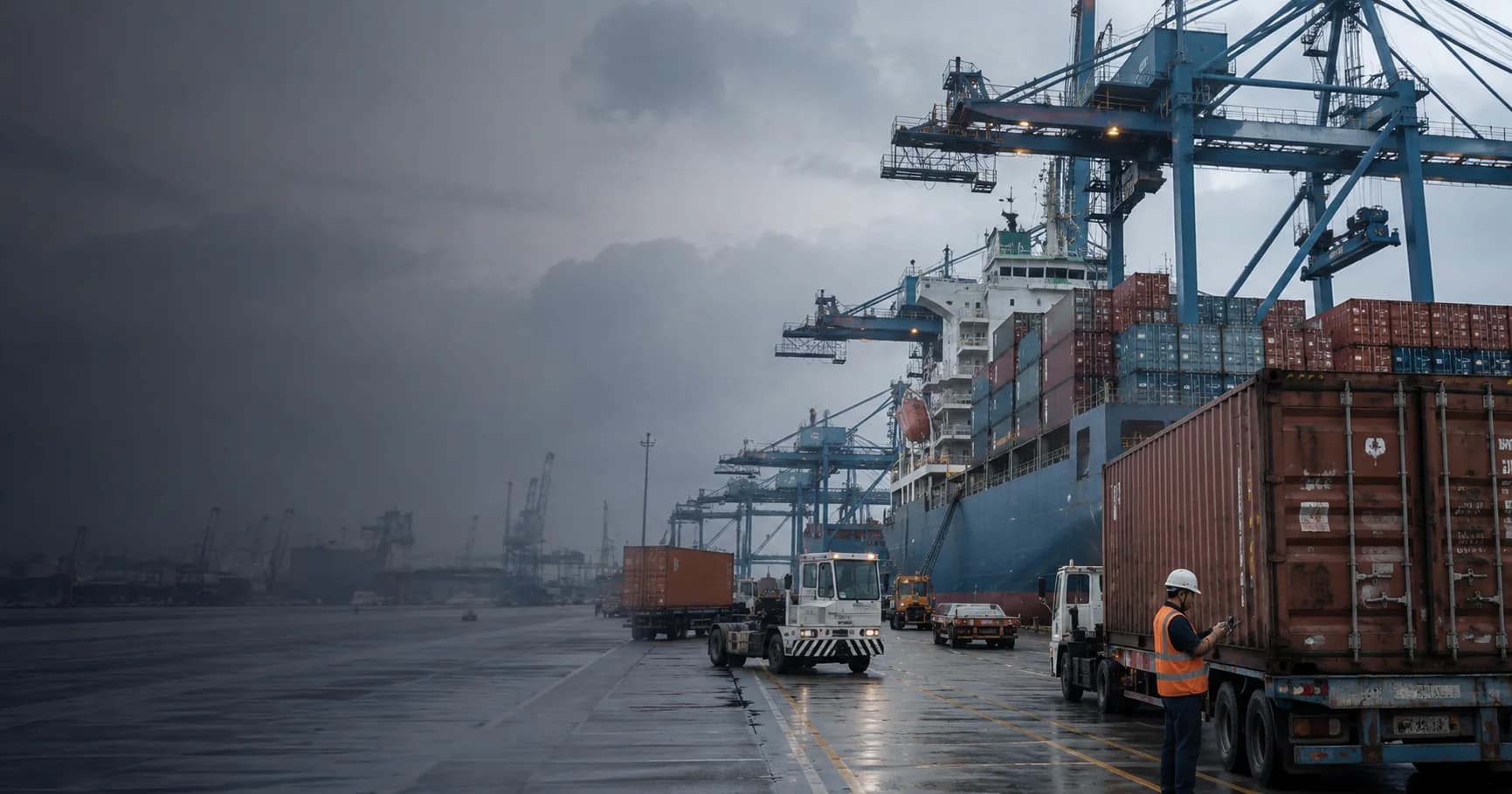
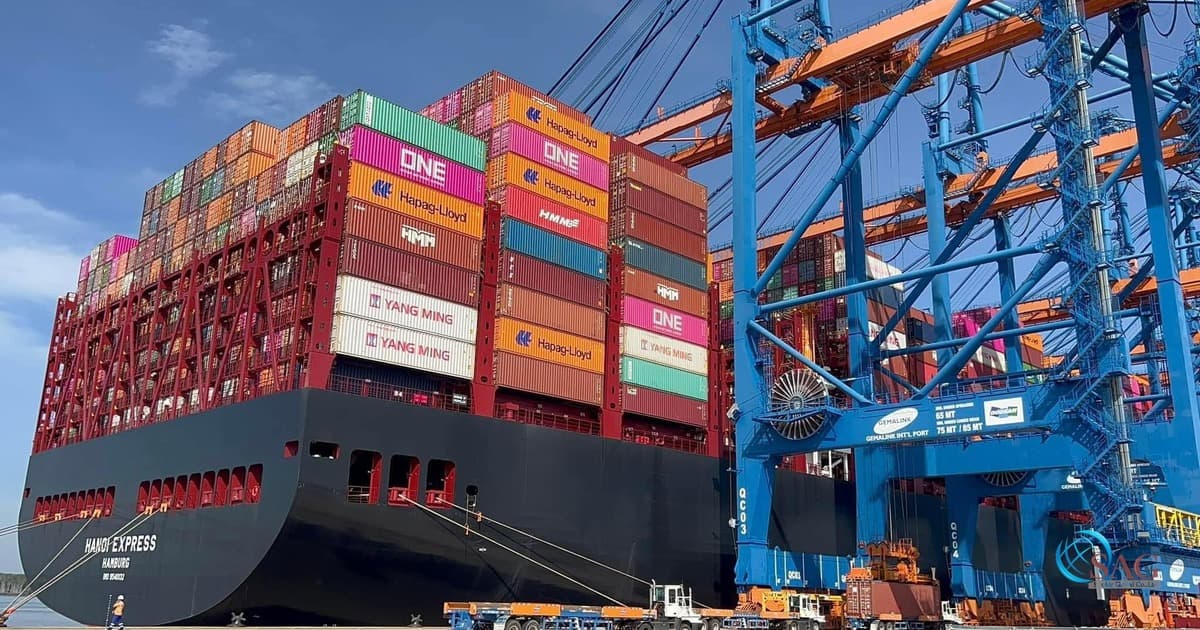
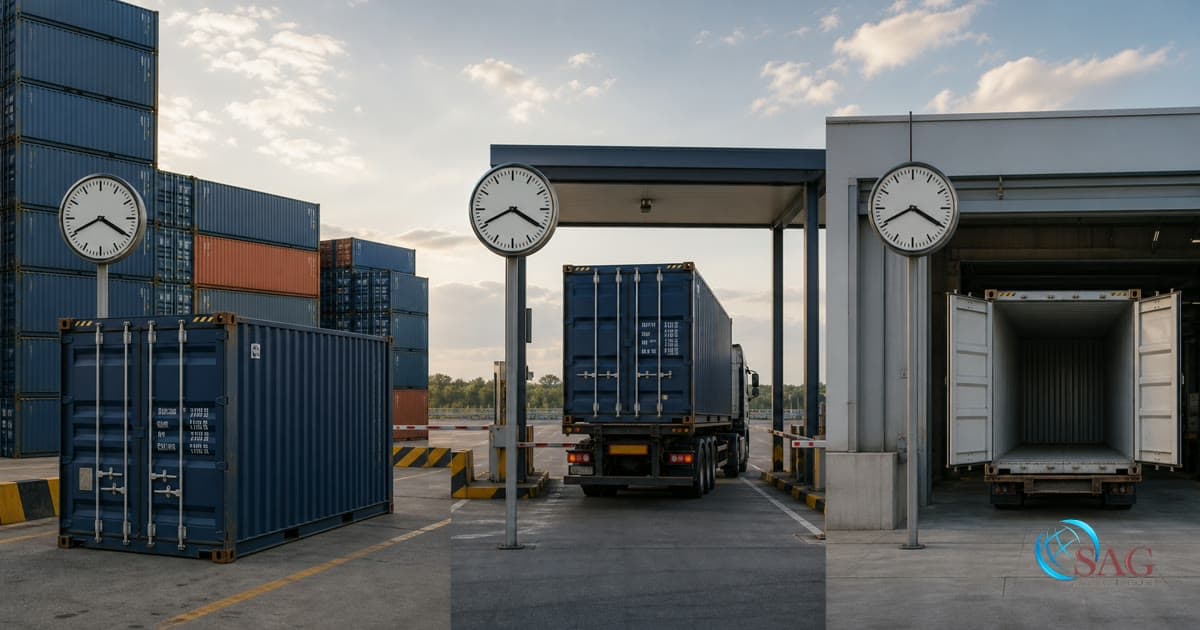
After a typhoon or severe weather event at a Chinese port, “the vessel is delayed” is not enough information to decide whether to collect a container, deliver cargo or switch plans. Each booking link needs verification because a terminal may reopen while the yard remains congested, a vessel may change berth, and cut-offs do not necessarily move automatically.
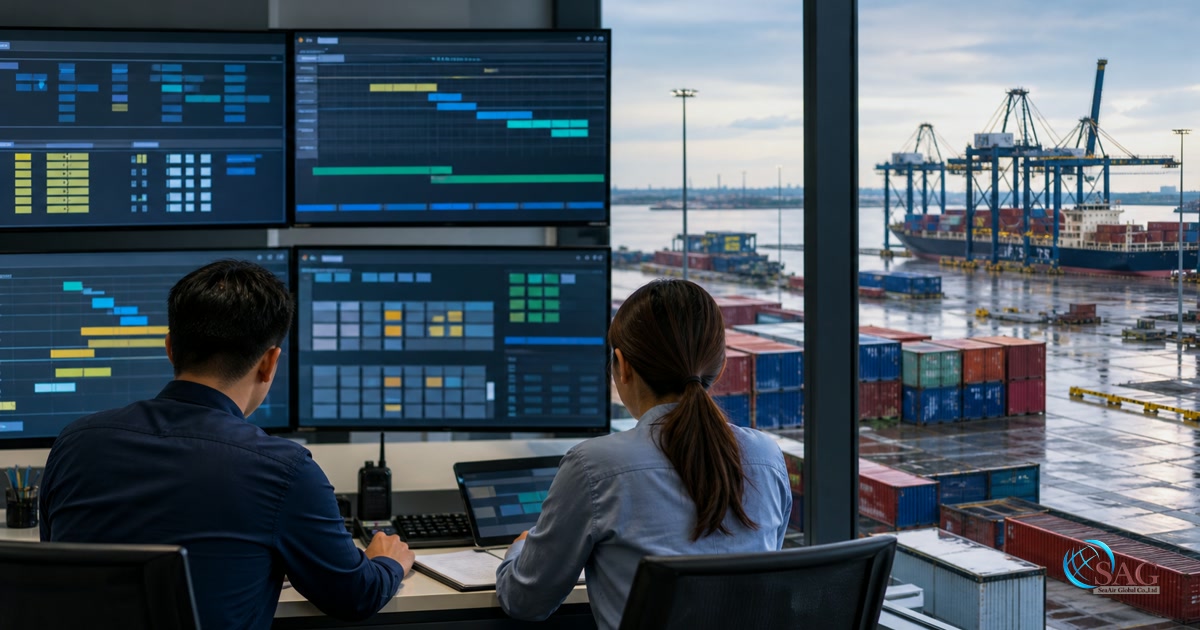
Typhoon Dolphin in August 2026 illustrates the need for shipment-level checks. Drewry reported average vessel waiting times of about 87 hours at Shanghai and 36 hours at Ningbo in week 32, but these were port-level observations—not a fixed delay for every booking.
Eight-point checklist
| Check | The question that needs a clear answer |
|---|---|
| 1. Terminal | Which terminal handles the shipment, and is its gate receiving containers? |
| 2. Vessel/voyage | Have the vessel, voyage, ETD or port call changed? |
| 3. Cut-offs | What are the latest SI, VGM, customs, dangerous-goods and gate-in cut-offs? |
| 4. Equipment | Is the release available, with the correct depot and equipment type? |
| 5. Transshipment | Has the feeder or hub changed, and is the connection at risk? |
| 6. Free time | Have free-time terms or delay-related charging rules changed? |
| 7. Rate and surcharges | Is the quotation valid, and are any new charges or conditions unconfirmed? |
| 8. Contingency | If delay exceeds the deadline, which sailing, port or mode is Plan B? |
1. Confirm the terminal, not only the port name
Large ports such as Shanghai and Ningbo contain multiple terminal areas. Opening status and congestion can differ. Confirm the terminal name, gate receiving status and the relevant CY/CFS operation.
If cargo has not left the factory, do not dispatch a truck solely because a general notice says the port has reopened. A closed receiving gate can create waiting or a failed trip.
2. Lock the vessel, voyage and port call
After disruption, a carrier may change the schedule, omit a call, move cargo to another vessel or adjust a feeder. Compare the latest booking confirmation with the carrier or forwarder's operational update.
The vessel name, voyage number and terminal should all match. Tracking only the vessel name can lead to reading the wrong rotation.
3. Check every cut-off separately
DCSA distinguishes documentation/SI, VGM, dangerous-goods, reefer and gate-in cut-offs. When ETD changes, do not assume each deadline shifts by the same number of hours.
Request written confirmation for each cut-off. SI or VGM may still follow the carrier's documentation planning even when vessel arrival is late.
4. Check equipment release and depot
Severe weather can slow empty-container circulation. Before dispatching a truck, confirm that the equipment release is active, the type is correct and the depot is operating. Allow additional inspection time for reefers, special equipment or clean-container requirements.
5. Monitor the transshipment leg
A China–Vietnam shipment may be direct or connect through a hub. When the first vessel is late, reassess the connection. Ask whether cargo remains protected on the next feeder or requires re-booking.
6. Review free time and cost responsibility
Do not assume demurrage, detention or storage will automatically be waived because of weather. Relief depends on the tariff, contract, carrier and terminal. Keep operational notices, confirmation emails and actual timestamps to support invoice review.
7. Reconfirm quotation validity and surcharges
Market indices may move after a storm, but a shipment quotation depends on validity dates, loading date, carrier and surcharge terms. Request a breakdown of base freight, THC, documentation, fuel or contingency charges and inland transport.
8. Set a trigger for Plan B
A contingency should have a clear trigger: if the new ETD misses the delivery deadline, move to another sailing, alternative port or split urgent cargo to air/road. Do not wait for an official rollover before looking for replacement capacity.
Message template for your forwarder
Please confirm for booking [number]: terminal, vessel/voyage and latest ETD; SI/VGM/customs/gate-in cut-offs; equipment release and depot; transshipment port/connection; free time; new surcharges; and the alternative sailing if delivery deadline [date/time] cannot be met.
Sources
- Drewry – Intra-Asia Container Index, 13 August 2026
- DCSA – Cut-off times in container shipping
- IMO – Verification of Gross Mass
For a booking-specific review, send the schedule and shipment details to SeaAir Global for a primary and backup plan check.