On 12 August 2026, the Vietnam Customs Department issued Letter 20238/CHQ-GSQL in response to a company’s questions about goods labeling under Decree 37/2026/ND-CP. The guidance helps distinguish three concepts that importers often conflate: the original label, the Vietnamese supplementary label and the electronic label.
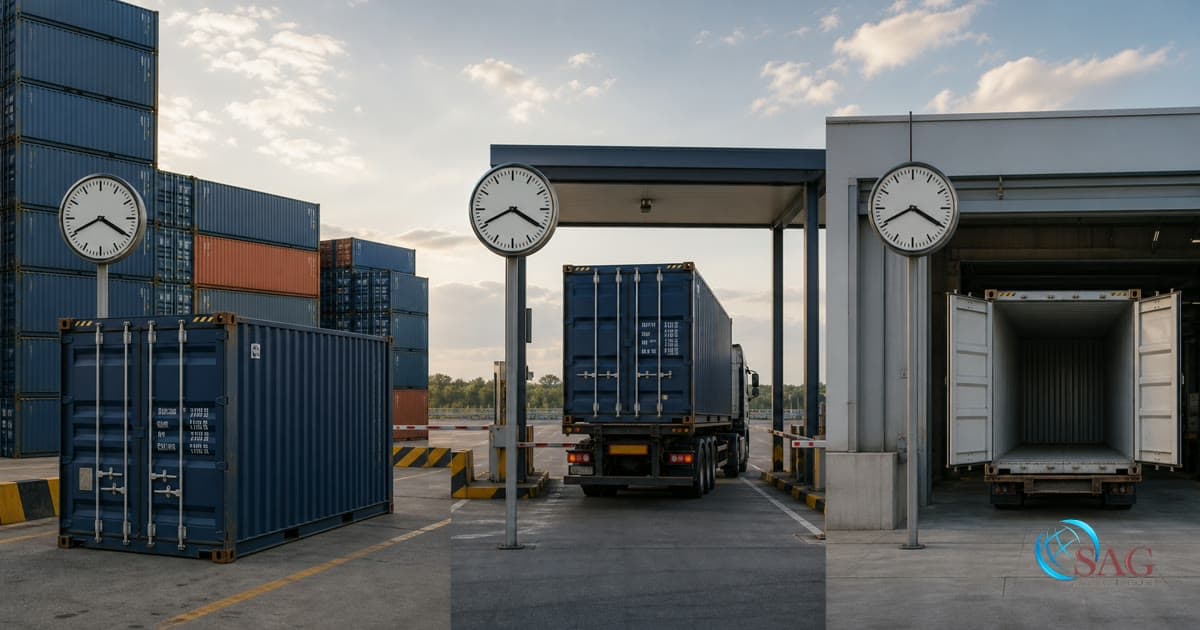
The most important practical point is to separate two compliance checkpoints: customs clearance and the point before goods are placed into circulation in the Vietnamese market. The requirements are not identical at those two stages.
Key requirements by compliance stage
| Stage | Requirement | Recommended business action |
|---|---|---|
| Before loading | Review the label intended for the shipment | Obtain actual supplier photos and cross-check them against the cargo dossier |
| At customs clearance | The physical original label must show the goods name, origin and the responsible foreign party | Inspect the label on the goods or packaging and prepare supporting shipment documents where applicable |
| Before market circulation | Complete the required Vietnamese information; the supplementary label must not obscure mandatory original-label content | Apply the label in the correct position and retain post-application photos |
| Sector-regulated goods | Comply with Appendix I and the applicable sector-specific rules | Identify the goods category and its additional requirements before importation |
Pre-import labeling checklist
- Actual label photos are available for every imported packaging level.
- The goods name, origin, and the foreign party's name and address are shown or supported by appropriate shipment documents.
- Label information is consistent with the invoice, packing list, contract and technical dossier.
- Product-specific labeling requirements have been identified.
- The Vietnamese supplementary-label artwork is ready before market circulation.
- Its intended position does not cover mandatory original-label content.
- Label artwork, translations and post-application photos are retained in the shipment file.
Detailed requirements
1. Meaning of the original label
Clause 6, Article 3 of Decree 37/2026 defines the original label as the label first displayed on the goods or their commercial packaging.
It is therefore not the Vietnamese sticker later added by the importer. It is the initial label attached to the goods or packaging during manufacture or packing.
2. Original-label requirements at customs clearance
Under Clause 2, Article 42, the original label of imported goods must be a physical label at customs clearance. It may be in a foreign language or Vietnamese, but must show:
- The name of the goods.
- The origin of the goods. If origin cannot be determined, the place where the final processing stage was completed must be stated in accordance with Clause 3, Article 47.
- The full or abbreviated name and address of the foreign manufacturer or the foreign organization/individual responsible for the goods.
If the original label does not display the full name and address of the foreign manufacturer or responsible party, the missing details must be fully shown in documents accompanying the goods or shipment documents, subject to Clause 2, Article 42.
Country or territory names may be abbreviated in accordance with TCVN 7217-1. Vietnam’s Ministry of Science and Technology has also explained that wording such as “Made in Korea” or “Product of Korea” may be considered at clearance if it clearly identifies origin and is consistent with the import dossier.
3. Scope of electronic labeling
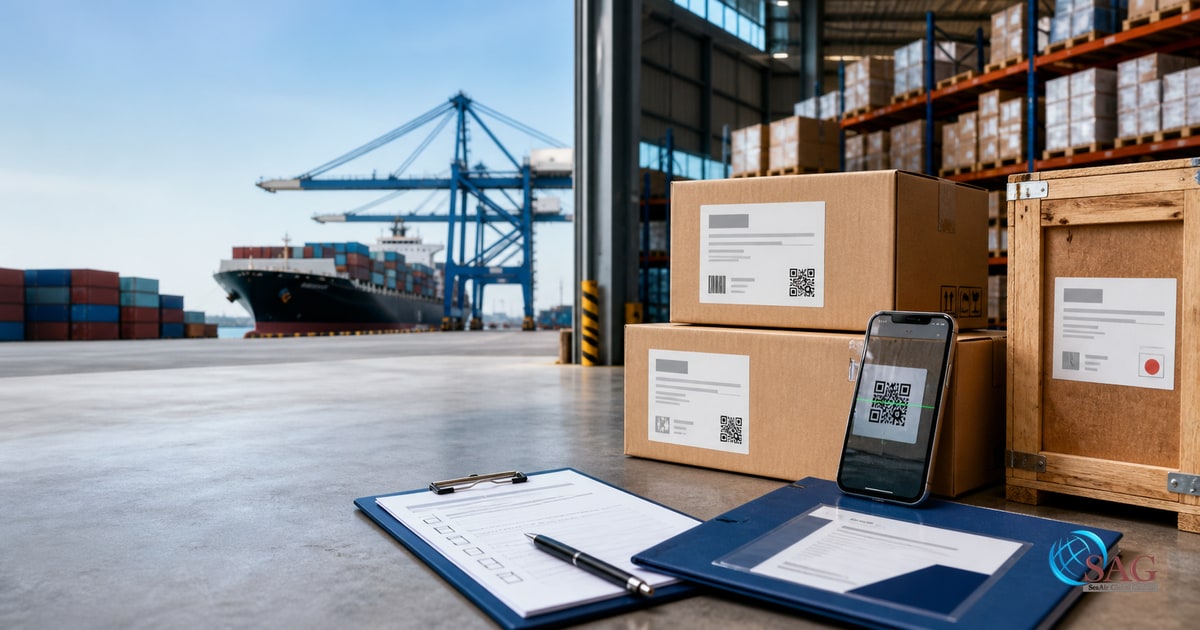
Clause 1, Article 52 generally allows the responsible organization or individual to use an electronic label for part or all mandatory information. The exception covers Clause 2, Article 42 and sector-specific laws that require a physical label.
Importers should therefore not assume that a QR code or web link alone can replace the original label. The three core information groups above still need to appear physically when the goods undergo customs clearance.
Electronic labeling can provide supporting information, but access and presentation must comply with Decree 37 and any applicable sector-specific rules.
4. Supplementary-label requirements before market circulation
For imported goods whose original label is in a foreign language, the importer must add the required Vietnamese labeling before placing the goods into circulation in Vietnam.
The supplementary label must:
- Be attached to the goods or their commercial packaging.
- Not obscure mandatory information on the original label.
- Translate mandatory original-label information into Vietnamese and add other mandatory particulars required for the relevant goods category.
- Preserve the original label. If the supplementary label is electronic, consumers must be clearly directed to it.
For goods circulating in Vietnam, the baseline Vietnamese information comprises the goods name; the name and address of the responsible organization/individual; origin; and additional particulars required by Appendix I and other relevant laws for that goods category.
Scope and sector-specific considerations
Letter 20238/CHQ-GSQL answers a specific inquiry by applying the existing provisions; it does not replace Decree 37/2026. Vietnam Customs also states that unresolved questions about the Decree itself should be submitted to the Ministry of Science and Technology, the drafting authority, for guidance within its competence.
Goods may also be subject to food safety, medical, chemical, energy, metrology or other sector rules. Importers should review the actual product and dossier rather than use one generic label template for every shipment.
Sources
- Vietnam Government Portal – Decree 37/2026/ND-CP
- Ministry of Science and Technology – Guidance on displaying goods origin
- Vietnam Government Portal – Can label information in shipment documents be accepted?
- Customs Letter 20238/CHQ-GSQL dated 12 August 2026, image supplied by the website owner.
This article is a general compliance overview and does not replace legal advice or case-specific guidance from the competent authority.
For support reviewing a shipment’s documents and labeling plan, see SeaAir Global’s customs brokerage service or request a consultation.