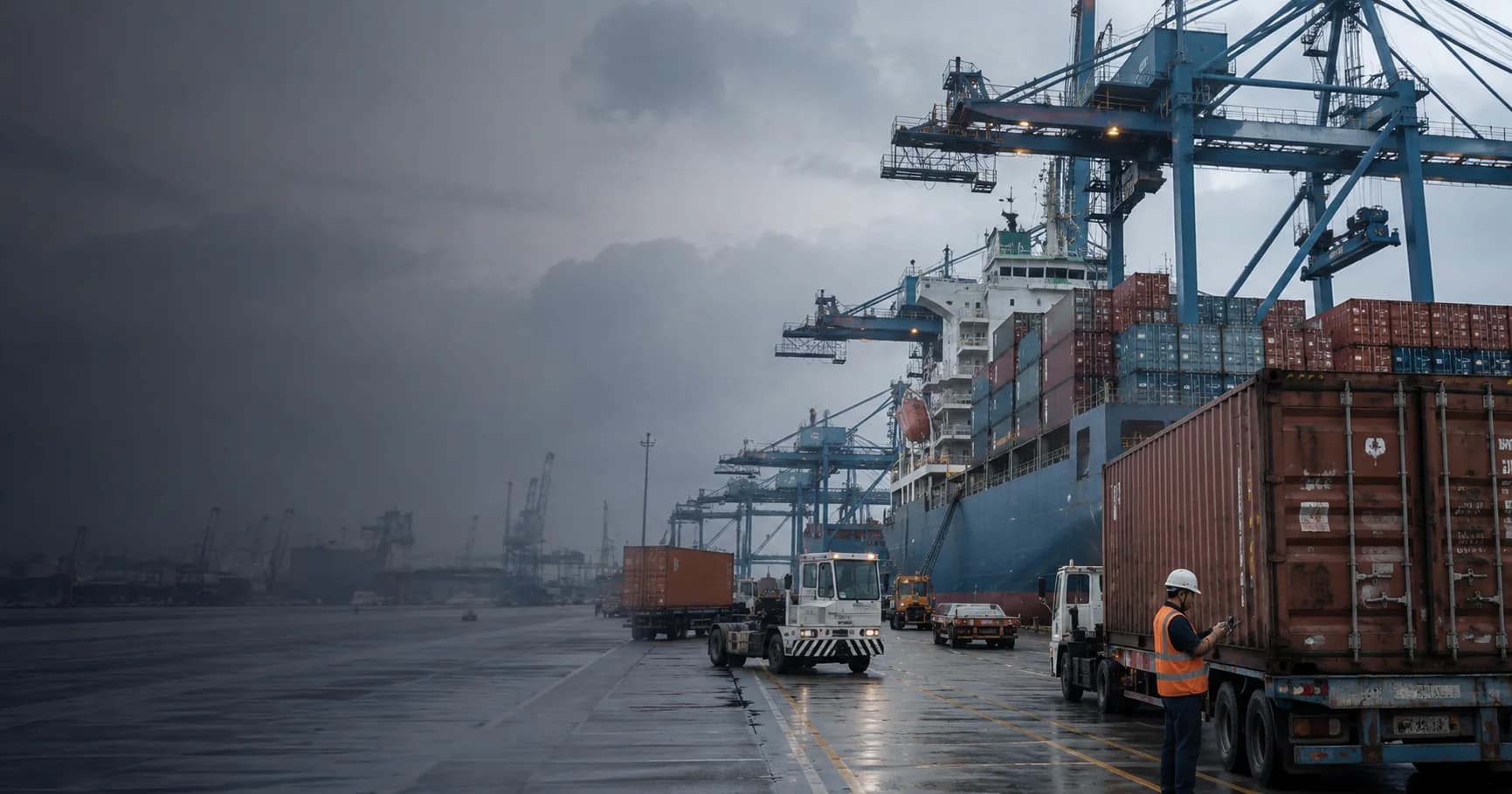
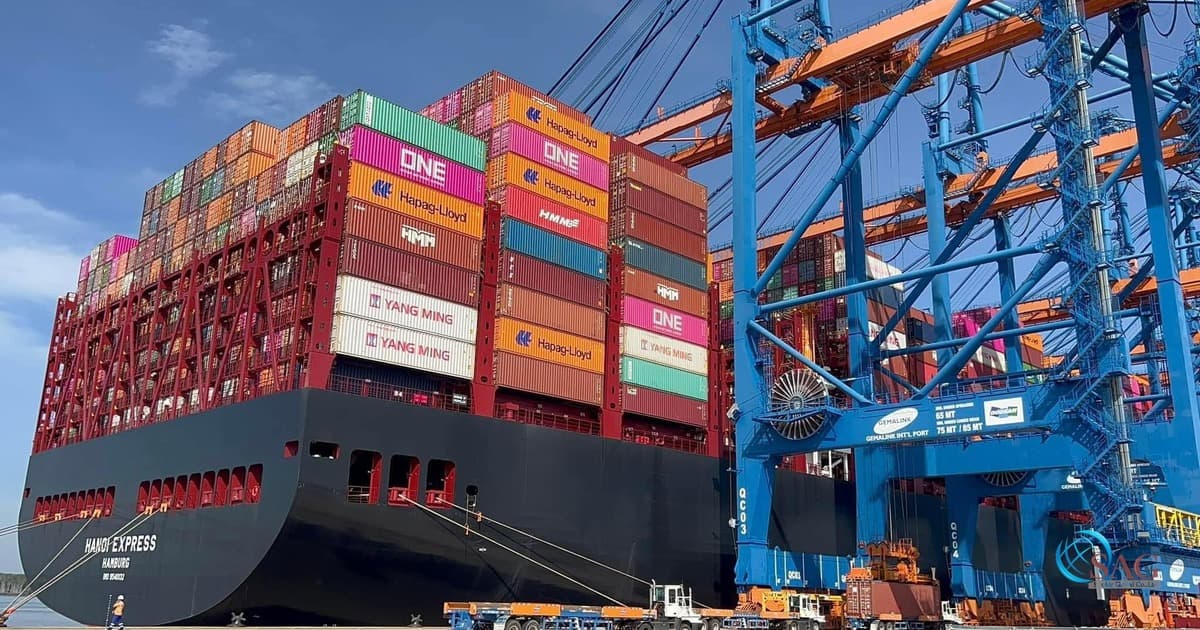
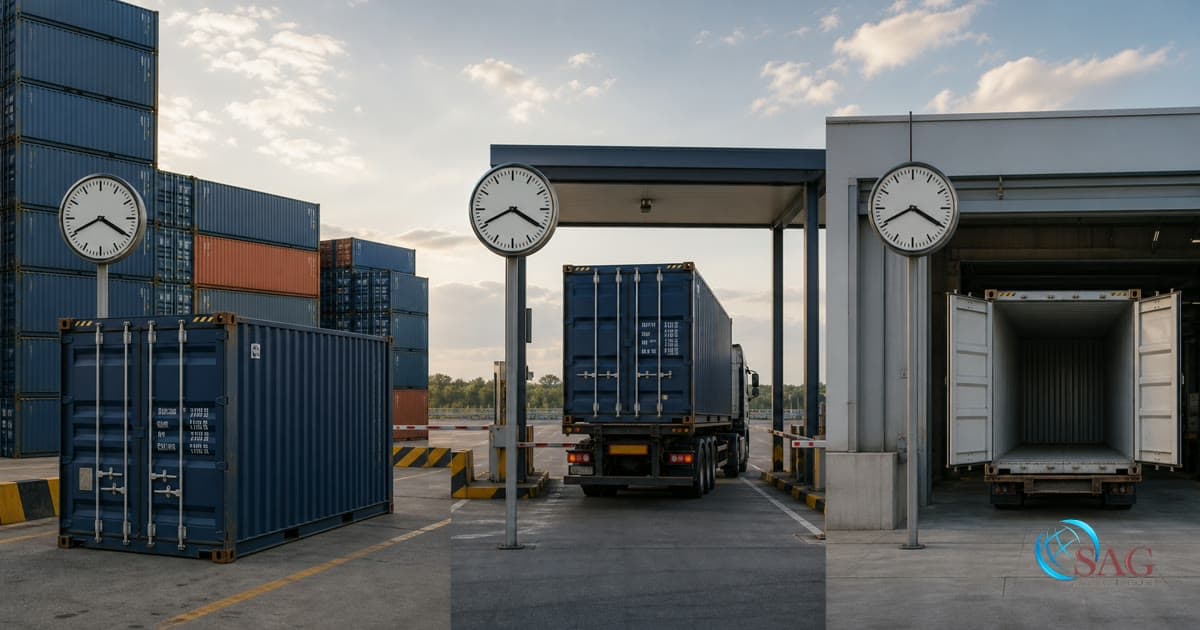
China logistics faced a combination of severe weather, port congestion and carrier capacity management during 10–16 August 2026. The key takeaway is not that every freight rate rose or fell together, but that each trade moved differently.
At a glance
| Development | Published figure | Operational meaning |
|---|---|---|
| Typhoon Dolphin affected East China | More than 900 flights were cancelled at Shanghai's two airports on 10 August, following about 1,300 the previous day | Air cargo, trucking and pickup/delivery connections may require recovery time |
| Intra-Asia rates rose | Drewry's IACI increased 6% to USD 1,028/40ft, a six-week high | Intra-Asia schedules and capacity remained under weather-related pressure |
| Port waiting times lengthened | Drewry reported averages of 87 hours at Shanghai and 36 hours at Ningbo in week 32 | ETD, ETA and cut-offs should be reconfirmed against the actual sailing |
| East–West rates diverged | Shanghai–New York rose 10% and Shanghai–Los Angeles 6%; Shanghai–Rotterdam fell 5% and Shanghai–Genoa 8% | A single China-origin trend cannot be applied to every trade |
1. Typhoon Dolphin disrupted air and port connections
AP reported on 10 August that Dolphin brought heavy rain and flooding to eastern China. Shanghai's Hongqiao and Pudong airports cancelled more than 900 flights that day after about 1,300 cancellations the previous day. Parts of the metro and rail network were also suspended.
For cargo, the effect extends beyond the cancelled flight itself. Factory pickups, warehouse receiving windows, terminal delivery and onward connections can all face a backlog while the network recovers.
2. Intra-Asia freight reached a six-week high
On 13 August, Drewry reported that its Intra-Asia Container Index rose 6% week on week to USD 1,028 per 40ft container. This was the second consecutive increase and the highest level in six weeks.
Drewry linked stronger China-to-Southeast Asia and South Asia rates to weather disruption at Chinese ports. Shanghai–Singapore increased 8% to USD 1,096/40ft. In the reverse direction, Ho Chi Minh City–Shanghai rose 14% to USD 74/40ft.
These are market benchmarks, not China–Vietnam quotations. IACI also excludes origin and destination terminal handling charges. An executable quote still depends on the exact ports, carrier, equipment, sailing, surcharges and delivery scope.
3. Pressure at Shanghai and Ningbo did not disappear immediately
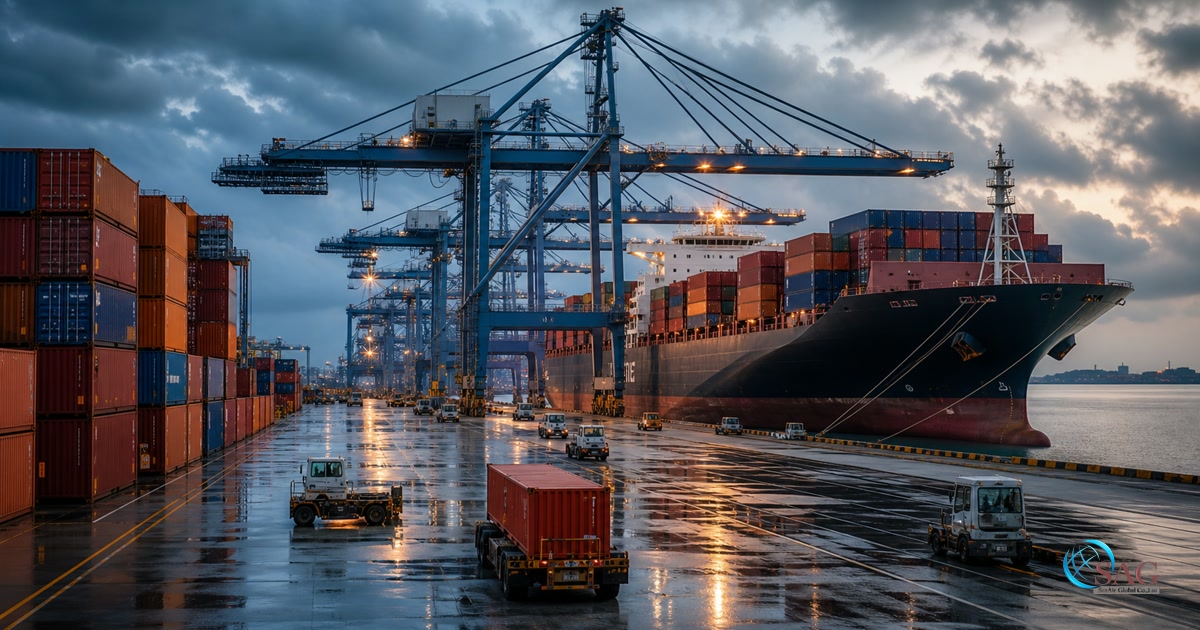
Drewry estimated that about 2.4 million TEU of containership capacity was waiting outside Chinese ports. In week 32, average vessel waiting time reached 87 hours at Shanghai and 36 hours at Ningbo.
Those are port-level observations, not a promised delay for each booking. One shipment may sail as planned while another changes berth, feeder or vessel. Track the actual vessel, voyage and terminal, not only the ETD printed on the original quotation.
4. Shanghai rates rose to the US but fell to Europe
Drewry's World Container Index increased 1% on 13 August to USD 4,339/40ft, mainly because of Transpacific increases:
- Shanghai–New York rose 10% to USD 8,706/40ft.
- Shanghai–Los Angeles rose 6% to USD 6,244/40ft.
- Shanghai–Rotterdam fell 5% to USD 4,425/40ft.
- Shanghai–Genoa fell 8% to USD 5,080/40ft.
The useful question is therefore not simply whether “China freight is up or down,” but which lane, which date, which service level and which included charges.
5. Blank sailings remain a capacity-management tool
Drewry's 14 August tracker expected 49 blank sailings across the main East–West trades from week 34 to week 38 (17 August–20 September), a 7% cancellation rate. About 59% of cancellations were on the eastbound Transpacific and 27% on Asia–North Europe/Mediterranean.
A blank sailing does not mean every booking is cancelled. It can, however, push cargo onto the following sailing and increase rollover or space risk in adjacent weeks.
What should Vietnam shippers do this week?
- Reconfirm the terminal, vessel/voyage and latest ETD before collecting equipment or delivering cargo.
- Check SI, VGM, customs and gate-in cut-offs separately; do not assume every cut-off moves automatically when a vessel is late.
- Ask for a charge breakdown covering base freight, THC, fuel or contingency surcharges, documentation and inland transport.
- Check quotation validity and space terms; do not apply a published index directly to a booking.
- For deadline cargo, prepare a later sailing, alternative port or split air/road option where commercially suitable.
Sources
- Drewry – Intra-Asia Container Index, 13 August 2026
- Drewry – World Container Index, 13 August 2026
- Drewry – Cancelled Sailings Tracker, 14 August 2026
- AP – Dolphin disrupts East China transport, 10 August 2026
These indices show market direction at publication time only. For a shipment-specific schedule and cost check, request a China–Vietnam quotation from SeaAir Global.