LCL (Less than Container Load) and FCL (Full Container Load) are the two basic ways to ship cargo by sea. LCL means a shipment shares container space with cargo from other shippers; FCL means a shipper books an entire container for its own cargo only. Choosing the wrong option affects not just cost, but transit time and handling risk as well.
LCL vs FCL at a glance
| Factor | LCL | FCL |
|---|---|---|
| Pricing basis | Per CBM (cubic metre) or per ton, whichever is greater | Per container (20-foot/40-foot), regardless of how full it is |
| Approximate break-even | Generally cost-effective under about 12-15 CBM | Often cheaper per unit of volume above about 12-15 CBM |
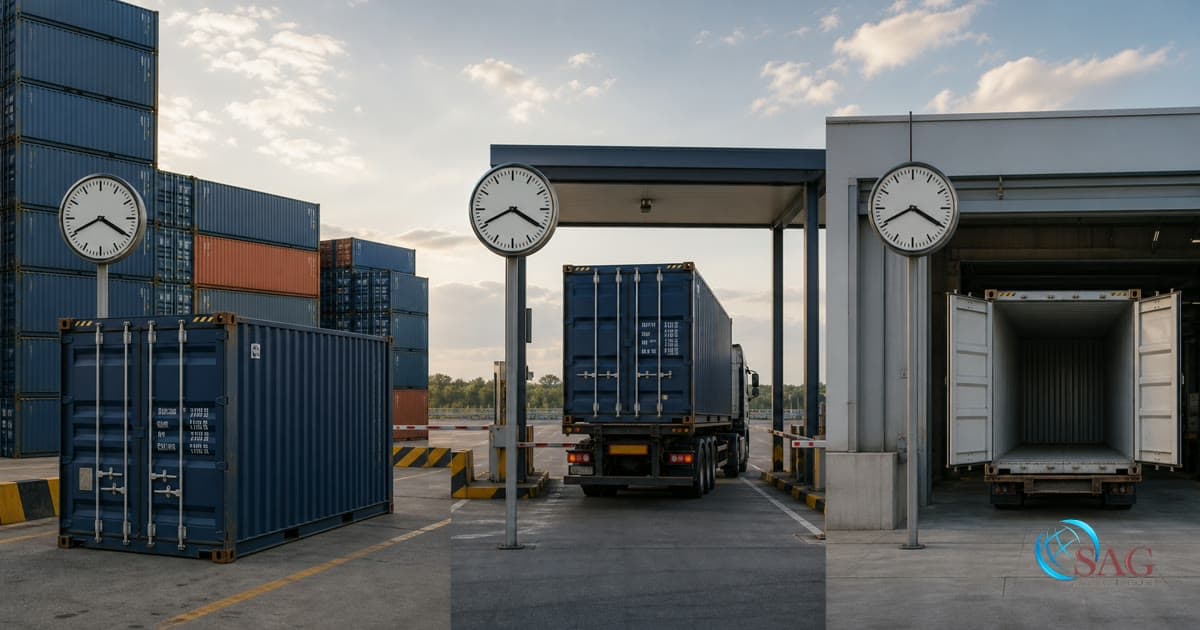
| Transit time | Adds time for consolidation at the origin CFS and deconsolidation at the destination CFS | Moves directly from packing point to unloading point, with fewer transfer steps |
| Handling touchpoints | More: consolidation, mixed loading, deconsolidation, redelivery | Fewer: packing, sealing, transport, unloading |
| Best suited for | Small shipments, samples, market-test orders | Larger shipments, fragile or high-value cargo, tighter schedule control |
The "12-15 CBM" range is a common industry reference point, not a fixed rule — the actual break-even depends on the trade lane, carrier, season, and local charges at each port.
Why LCL typically takes a few extra days
LCL cargo goes through two steps that FCL does not: consolidation with other shippers' cargo at an origin Container Freight Station (CFS) before container loading, and deconsolidation at a destination CFS after the container is unloaded. These two steps add processing time compared with FCL cargo moving directly from the packing point to the unloading point.
With FCL, because the entire container belongs to one shipper, packing, sealing, transport, and unloading at destination typically involve fewer transfer steps, which usually shortens overall transit time on the same lane.
How does handling risk differ?
LCL cargo has more touchpoints: loading into a shared container, unloading at the destination CFS, then redelivery to each individual shipper. Each touchpoint is an opportunity for impact damage, moisture exposure, or misplacement if packing is not sufficiently secure.
FCL keeps cargo inside one sealed container from packing to unloading at destination, so cargo is typically moved between vehicles or facilities fewer times.
Look beyond the base freight rate
An LCL shipment may have a lower base rate, but it can add CFS and mixed-cargo handling charges at both ends. An FCL shipment has a fixed container rate, but if the cargo does not fill the container, the unused volume is still paid for as if it were used.
The LCL-versus-FCL decision should therefore be based on the total realistic cost for the specific shipment, not a comparison of base rates alone.
A checklist for choosing LCL or FCL
- Calculate the actual total volume (CBM) and weight of the shipment rather than estimating.
- Compare total LCL cost (freight plus CFS charges at both ends plus local charges) against total FCL cost (container freight plus local charges), not base rates alone.
- Confirm the required delivery timeline — for tight deadlines, FCL is often preferable if the added cost is acceptable.
- For fragile, high-value, or quality-sensitive cargo, FCL reduces the number of handling touchpoints.
- For samples, market-test orders, or small recurring volumes, LCL is typically more cost-effective.
- Confirm that both the origin and destination ports have reliable LCL/CFS service for the specific lane, since consolidation frequency is not the same on every route.
A simple example
An 8 CBM shipment, not fragile, no tight deadline: LCL is typically the more cost-effective choice.
>
An 18 CBM shipment that must arrive on time for an event: a 20-foot FCL container may be preferable even with unused volume, because it reduces the delay risk associated with consolidation and deconsolidation.
This illustrates how to weigh the decision. It is not a formula that applies to every shipment.
Sources
For help choosing between LCL and FCL for a specific shipment, review SeaAir Global's ocean freight service or request a quotation.