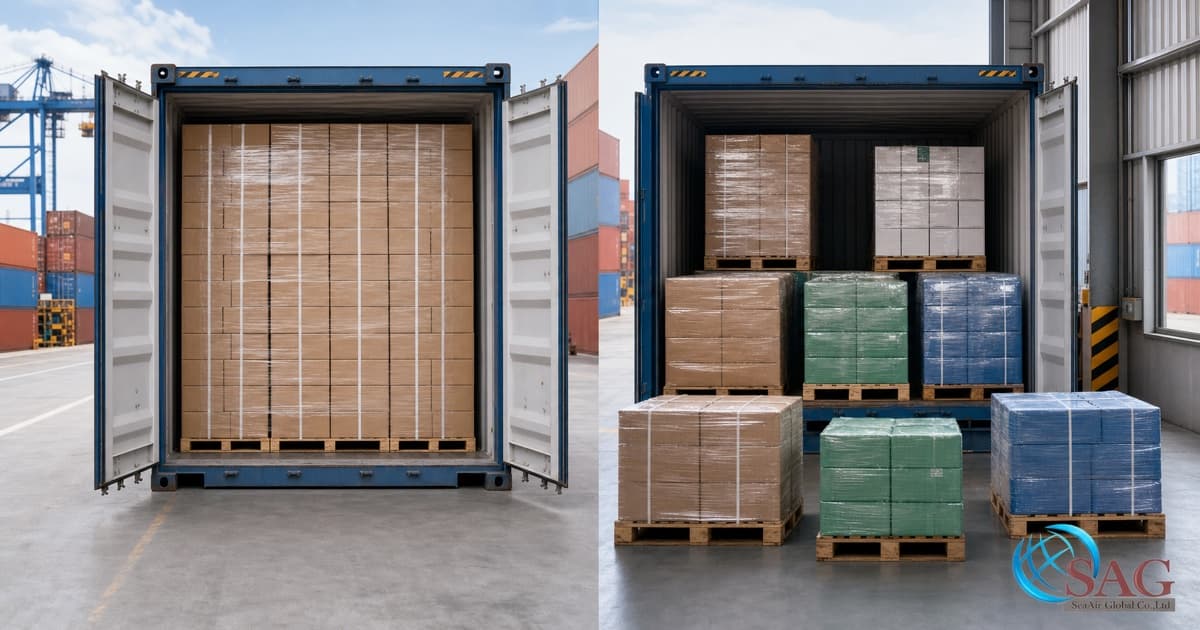
FCL (Full Container Load) means one container is used exclusively for a single shipper's cargo. LCL (Less than Container Load) means cargo from several shippers is consolidated into the same container.
When does LCL make sense?
LCL suits smaller shipments that are not large enough to fill a container efficiently, and it helps businesses keep inventory lean. Cost is usually calculated by CBM or chargeable weight. In exchange, cargo goes through consolidation and deconsolidation at a CFS warehouse, so transit time can be longer and extra handling and fees apply at both ends.
When does FCL make sense?
FCL suits larger volumes, shipments that need less handling, or cargo that requires tighter container control. You pay for the whole container, but the per-unit cost can improve once volume reaches an efficient threshold. FCL schedules are usually more predictable since there is no consolidation wait.
Five questions to ask before deciding
- What is the total volume, weight and number of packages?
- Is the cargo fragile, high-value or sensitive to being loaded with other shipments?
- Does the delivery deadline allow time for consolidation or deconsolidation?
- How do origin and destination local charges differ between the two options?
- Could the cargo quantity still change before the closing date?
There is no single CBM threshold that fits every route. SeaAir Global can compare FCL and LCL options based on sailing schedules, total cost and your specific delivery requirements.
Connected Social Media
View comments, original media, and interact directly.