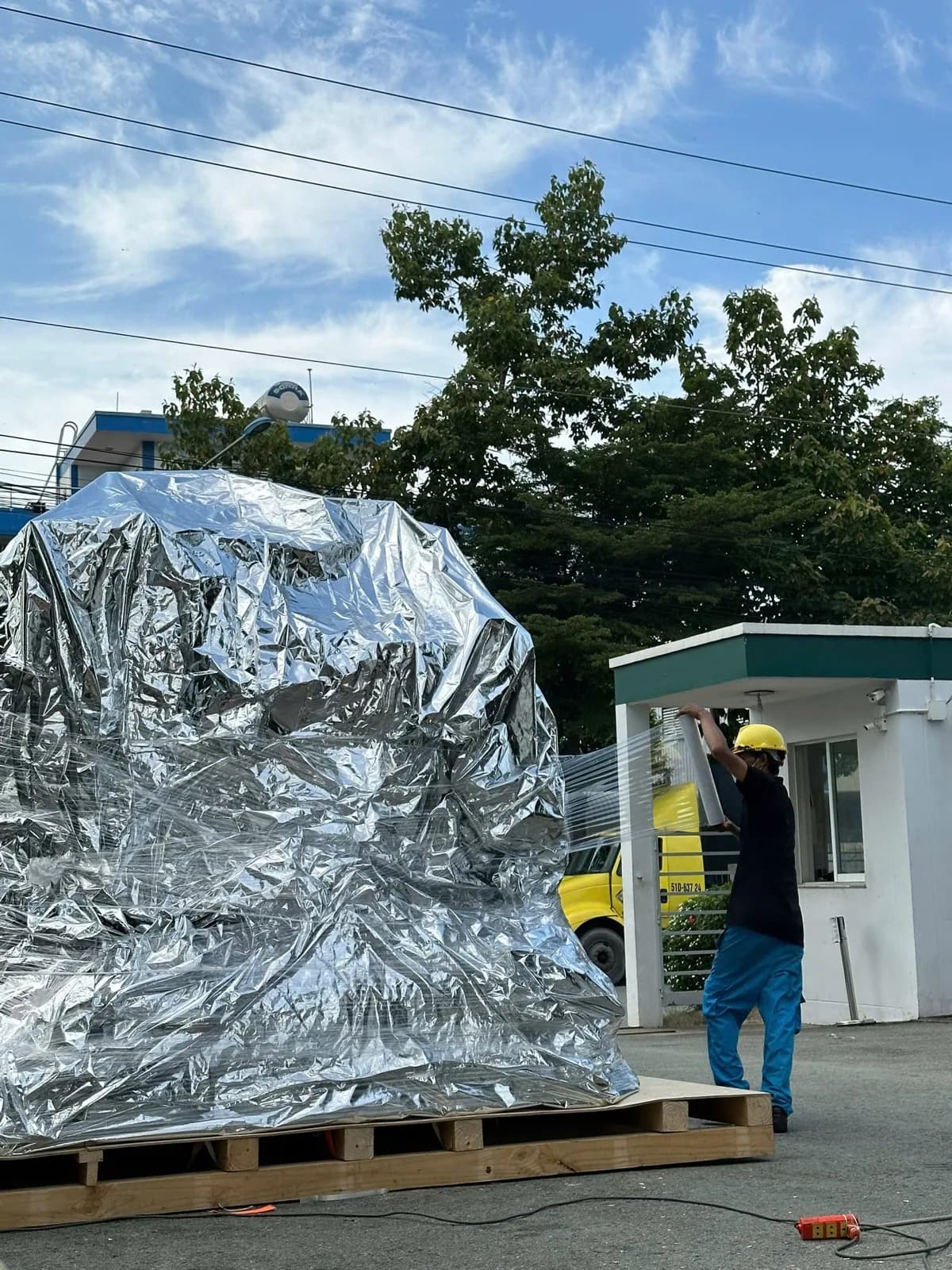
A shiny barrier layer that looks closed from the outside does not prove that machinery is ready for sea transport. Moisture may already be present before wrapping; seams may leak; sharp edges, bolts or lashings may puncture protection during handling.
Effective moisture protection is a system covering surface condition, material, sealing, moisture control, the load-bearing base and lifting/securing interfaces.
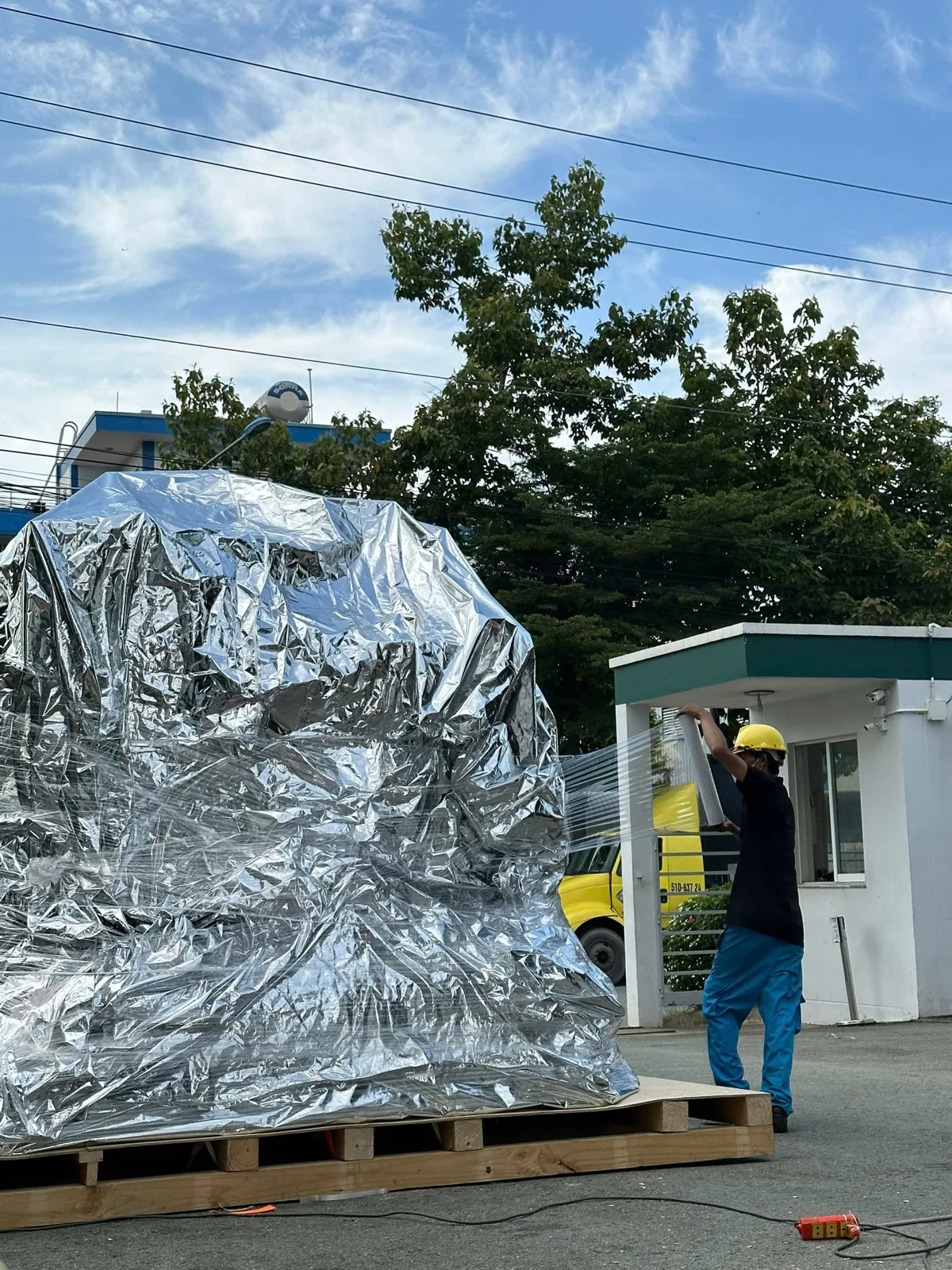
Seven checks before the outer crate is closed
- Clean, dry surfaces: do not seal in wash water, condensation or leaking fluid.
- Sensitive parts protected: cover connectors, controls, machined faces and sharp corners appropriately.
- Barrier covers the intended envelope: avoid gaps and excessive tension.
- Seams and penetrations sealed: inspect the bottom, corners, pipes/cables and base interfaces.
- Desiccant selected and positioned deliberately: consider volume, route, storage time and packing conditions; do not place it randomly on the machine.
- Base and securing do not damage the barrier: cushion bolts, timber edges, braces and lashing interfaces.
- Inspection photos retained: photograph four sides, seams, desiccant, securing points and package labels.
Sealing does not replace securing
Moisture protection protects surfaces; it does not immobilise the machine. Blocking, bracing, bolting or other engineered securing may still be required. The design should prevent relative movement between equipment and base from tearing the barrier.
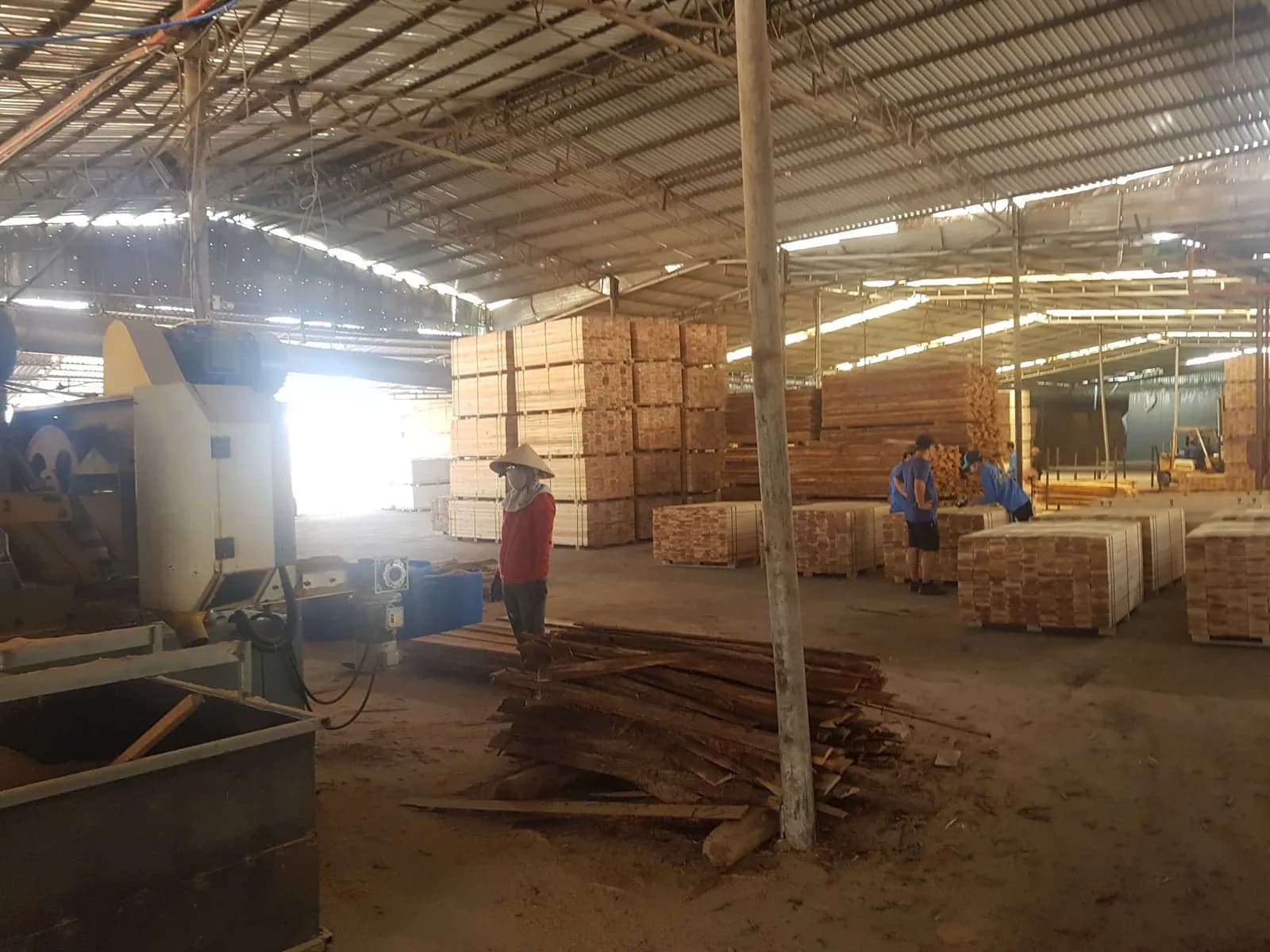
The CTU Code provides guidance on packing, load distribution and securing in cargo transport units. Where timber bases, braces or crates are used in international trade, check the applicable scope of ISPM 15 and destination rules rather than assuming every wood product is treated identically.
Photo records support handover
Record the machine before wrapping, each protective layer, securing interfaces, the finished outer package and the unit after container loading. Photos do not replace technical inspection, but help define the work completed and support review if tearing, wetting or movement is later observed.
Not every machine needs the same specification. Electronics, precision surfaces, long storage or routes crossing different climates may require specialist assessment.
See SeaAir's real machinery-packing workflow, or send a request with photos, dimensions, weight, route and expected storage time for a shipment-specific plan.